

Hot Melt Adhesive Fabric Bonding Temperature Guide
- 2026-09-19
- EVA TPU Film Manufacturers & Suppliers in China
- 603
When bonding fabrics with hot-melt adhesive, the temperature typically needs to be set between 130°C and 160°C, with the exact value depending on the fabric material and the characteristics of the adhesive film. For synthetic fabrics such as polyester or nylon, it's best to use a lower temperature range—around 130 to 145°C—to prevent shrinkage or melting distortion. Natural fibers like cotton, linen, or wool can handle slightly higher temperatures of 150 to 160°C, but wool, being a protein fiber, has poor heat resistance, so the upper limit should be strictly controlled.
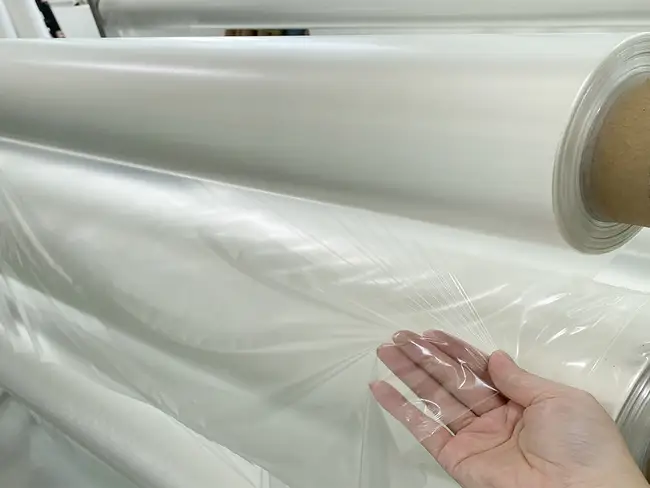
In practice, temperature settings need to be adjusted in coordination with pressure and time parameters. If the temperature is too low, the adhesive won't melt fully, leading to weak bonding and easy delamination. If it's too high, you may run into issues like adhesive bleed-through, heat damage to the fabric, or the adhesive layer becoming brittle and cracking. It's a good idea to run small sample tests before full-scale production to check peel strength, fabric hand feel, and any visible changes in appearance.
Also, make sure the temperature control system on your equipment is accurate. Regularly calibrate the temperature readouts on your heat press or fusing machine to avoid batch-level quality issues caused by equipment drift. For multi-layer laminated fabrics or specialty materials with waterproof coatings, lower the temperature and extend the pressing time instead. This allows heat to penetrate evenly without compromising the fabric's functional properties.