

TPU Hot Melt Adhesive Film: The Seamless Textile Revolution
- 2026-09-16
- EVA TPU Film Manufacturers & Suppliers in China
- 157
Ever had that annoying chafing where clothing seams rub against your skin? Or dealt with the frustration of down feathers poking through your jacket? Behind these everyday annoyances lies the hidden world of fabric bonding technology. TPU hot melt adhesive film is quietly transforming the textile industry with what's being called a "seamless revolution."
As a new generation of eco-friendly bonding material, TPU hot melt adhesive film is steadily replacing traditional sewing methods thanks to its outstanding flexibility and elasticity. It doesn't just eliminate the uncomfortable ridges left by needle-and-thread stitching—it creates a molecular-level bond between fabrics. Picture two layers of material fusing together under heat and pressure: the result keeps the original soft hand-feel while delivering industrial-grade bonding strength. That's the real magic of modern textile engineering.
Core Properties Explained
TPU hot melt adhesive film has become the go-to choice for fabric bonding because of its unique physical and chemical characteristics. First, there's its built-in elastic memory—even after repeated stretching and deformation, it snaps back to its original shape, which is critical for next-to-skin garments. Then there's its impressive weather resistance, staying stable across temperatures from -30°C to 80°C, so the bond won't crack even after dry cleaning or machine washing.
Its eco-friendly credentials are another major selling point. The solvent-free manufacturing process has earned certifications like the EU's strict REACH standard. When heated to 110–150°C, the film melts and flows; apply the right pressure, let it cool, and you've got a permanent bond. This "heat-activated" behavior makes the process both precise and efficient.
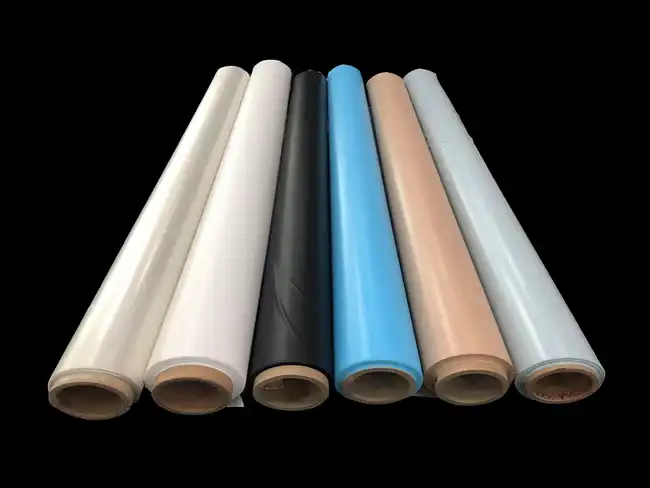
Eight Industry Applications
In apparel manufacturing, seamless underwear is the most iconic use case. By precisely controlling film thickness down to 0.08mm, manufacturers achieve a flawless bond between lace and cotton, completely eliminating the restrictive feel of traditional stitching. Data from premium lingerie brands shows that this technique boosts customer comfort scores by 37% while cutting product defect rates by 63%.
Down jackets, meanwhile, benefit enormously from the film's anti-pricking performance. Using a grid-dot lamination process that places 25–30 bond points per square centimeter, the fabric stays breathable while locking in the down. In testing by an international outdoor brand, TPU-laminated fabric shed only one-eighth the down of conventionally stitched material after 50 wash cycles.
Sports footwear pushes the technology even further. When bonding shoe uppers, the film needs an open time of 25 seconds at 120°C so workers can align complex curved surfaces with precision. Advanced hot-air pressing systems can control temperature to within 0.1mm accuracy, ensuring a reliable bond between EVA midsoles and mesh fabrics.
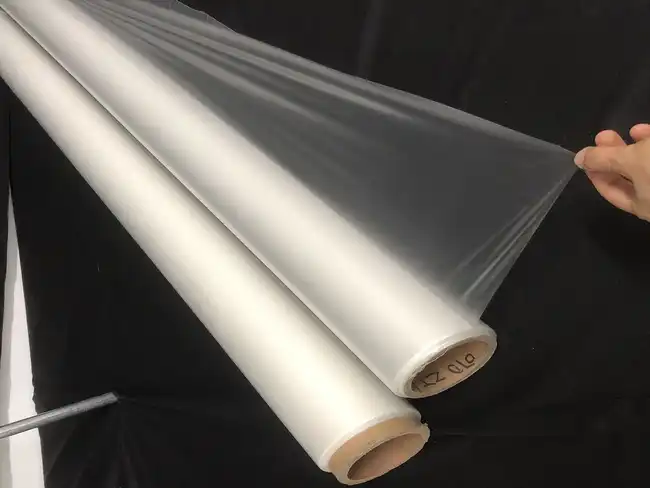
Professional Application Guide
In practice, temperature control is the make-or-break factor. Different fabrics demand different settings: cotton and linen call for around 130°C for 15 seconds; synthetics need 110°C for 12 seconds; and specialty coated fabrics should be kept at 95°C with a silicone pad for heat insulation. Pressure matters just as much—flatbed presses typically run at 0.3–0.5MPa, while roller laminators need to be adjusted to a linear pressure of 1.2–1.8 kg/cm².
Troubleshooting common issues takes a bit of know-how. For localized delamination, use a spot-repair method: heat the area with a hot air gun until the film turns transparent, then immediately press it down with a silicone roller. If a full panel fails to bond, check for mold-release agent residue on the material surface—wiping it down with medical alcohol usually solves the problem.
Future Trends
As textile technology evolves, TPU hot melt adhesive film is moving toward multifunctional composites. The latest conductive films achieve resistance values of ≤10Ω/sq, making them suitable for direct integration into smart garment circuitry. And temperature-regulating versions infused with phase-change materials can automatically adjust bonding strength within the 28–32°C range, opening up new possibilities for modular, detachable clothing designs.
From high-end bespoke pieces to everyday ready-to-wear, TPU hot melt adhesive film is reshaping the entire textile supply chain. It's not just a step forward in manufacturing—it's a redefinition of how clothing relates to the human body. When technology gets gentle enough, garments truly become a "second skin." Next time you run your fingers over a perfectly seamless garment, take a moment to appreciate the material science working quietly beneath the surface.